
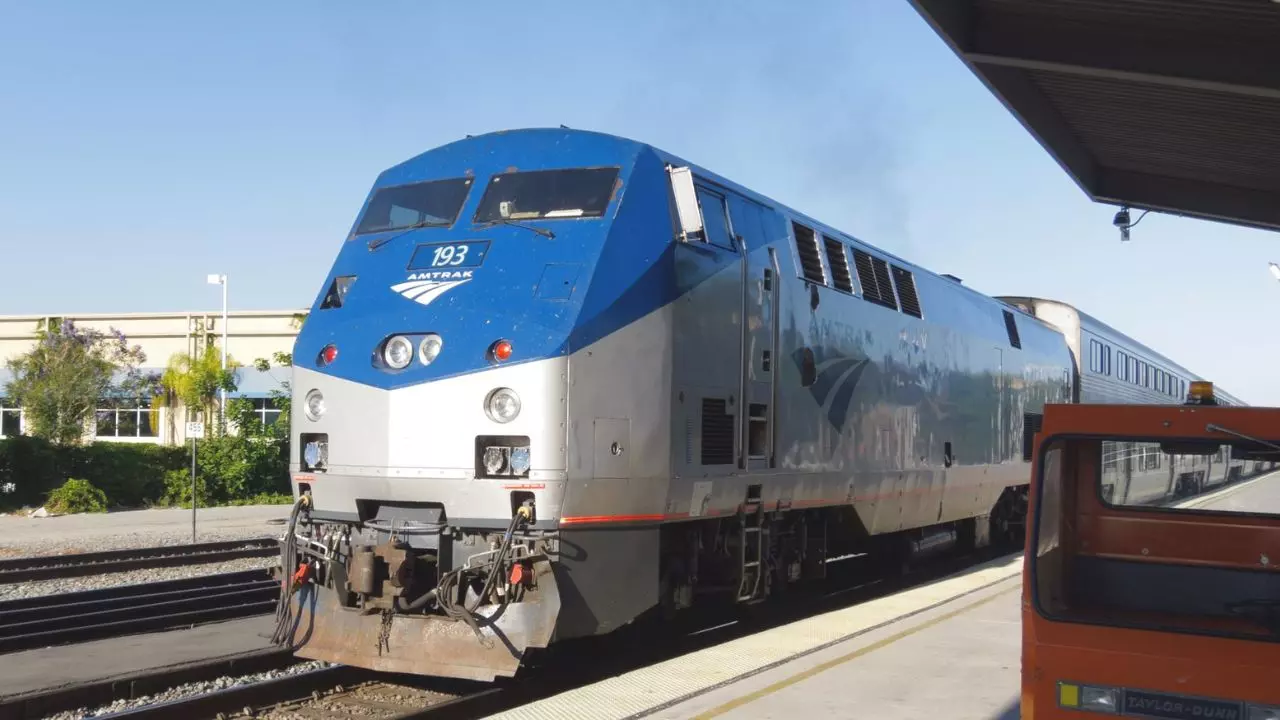
At times, when planning a train travel and wondering why Amtrak is so expensive, you must note that ticket prices are always influenced here due to high infrastructure maintenance costs.
Secondly, there are limited subsidies available from the federal government. Average fares on Amtrak start as low as 100 USD for shorter routes, but climb up to 700 USD for long-distance travel, inclusive of all amenities.
There are other contributing factors, which are mentioned in-depth below, that will always make you wonder why rail fares in the United States are always on the higher side.
What Makes Amtrak Tickets So Expensive?
When you look closely, why Amtrak rail tickets are expensive, it is mainly because of the system. Unlike European and Asian rail networks, who receives a larger portion of subsidies from their respective governments, Amtrak does not receive any to cover its operating costs. Because of this, Amtrak recovers a sizeable portion of its operational expenses by selling train tickets at a higher price.
Let’s understand each factor that contributes to the Amtrak high ticket prices:
Infrastructure expenses
Amtrak’s job is to maintain a vast rail network in the United States, and most of it is very old, dating back to the 20th century. The tracks run through cities, countryside side and remote areas which are hard to reach.
At times, these tracks are exposed to harsh weather. Fixing and maintaining these tracks is expensive and time-consuming at the same time.
Unlike cars and buses, trains cannot make a U-turn if the track is damaged. Rapid repairs must be done up front and safely to avoid delays and accidents, which increases the track maintenance costs.
When tracks need repair in any remote areas, the cost of maintenance becomes even higher because of transportation and labor costs. An even bigger challenge is transporting heavy equipment in those remote areas.
All these maintenance costs are included in the passengers’ fares, which is why Amtrak’s prices increase. In simpler terms, keeping the Amtrak rail network safe and reliable is a costly affair, and these expenses are passed on to passengers through higher ticket costs.
Government funding
Though Amtrak received funding from the U.S. Government, but is not enough to cover its operational expenses. In 2021, the government approved a large infrastructure investment in Amtrak to renovate its tracks and refurbish its rail systems, but the rail company still faces a shortage of funds in the long run.
Due to this lack of sufficient support, Amtrak continues to operate on losses year-by-year. Amtrak relies heavily on ticketing revenue to cover its operational costs, which leads to expenses rail fares for passengers.
For instance, all European countries receive stronger subsidies from their governments for their rail networks. The government ensures that train travel is more affordable than by road or air. The fact is that the U.S government des it subsidises Amtrak to the same extent, thus ending up being more expensive.
Non-Profitable routes
As mandated by law, Amtrak is bound to continue operating on many long-distance rail routes that do not make money. These routes cater to remote, less populated areas, so fewer people book reservations for them.
How does Amtrak cover these losses? They rely on its most penetrated and successful route – the Northeast Corridor (NEC). The NEC Corridor is 457 miles long and contributes to nearly 40% of Amtrak’s total revenue. In comparison, Amtrak’s entire rail network in the United States is 21,400 miles. It clearly indicates that a handful of routes financially support the rest of the rail network.
This creates a Catch-22 situation. All profits from the NEC corridor are used to pump the long-distance travel routes. As a result, there is always a lack of funds to repair Amtrak’s aging infrastructure, which requires timely maintenance and always increases further costs.
Employee expenses
Employees’ salaries and remuneration play a role in the highly expensive Amtrak tickets. Amtrak has to pay market-fit compensations to engineers, conductors, and operational staff to meet labour standards. These salaries must be paid on time regardless of many passengers and board, even on low-footfall routes, which affects Amtral’s profitability.
Railway track ownership
Ownership of the railways adds another high cost to Amtrak tickets. In reality, Amtrak owns 630 miles of track out of the 21,400-mile network. For the remaining tracks, they have to pay rent to freight rail companies to access tracks. The amount Amtrak pays for tracks is roughly 5 USD per mile. When Amtrak is running operations for thousands of miles, these rental fees add up to millions each year in its operational expenses.
Market dynamics
Amtrak’s direct competitor does not exist. The rail network faces an existential crisis from airlines like United and Delta, which offer the same travel costs for longer routes in lesser duration.
Similarly, the airline also faces competition from bus services like Greyhound, which offers more affordable fares for longer routes.
Since the 1960s, there has been a paradigm shift in travel consumption among Americans who prefer flight reservations and car rentals over train usage. Because of this, the airline has operated at a loss year after year, thus balancing the higher operational costs with lower demands.
What is Amtrak’s Pricing Model?
Amtrak deploys dynamic pricing, which is similar to that of airlines, where fares fluctuate based on demand and seasons.
This fairly explains why Amtrak is so expensive during peak travel seasons like Thanksgiving, Christmas, and holidays. During these seasons, the high demand spikes the rail fares.
Dynamic pricing explained
For instance, the Amtrak ticket price from New York to Atlanta during 16-18 December 2025 (high peak travel period) would be around 669 USD for the Private-Room class.
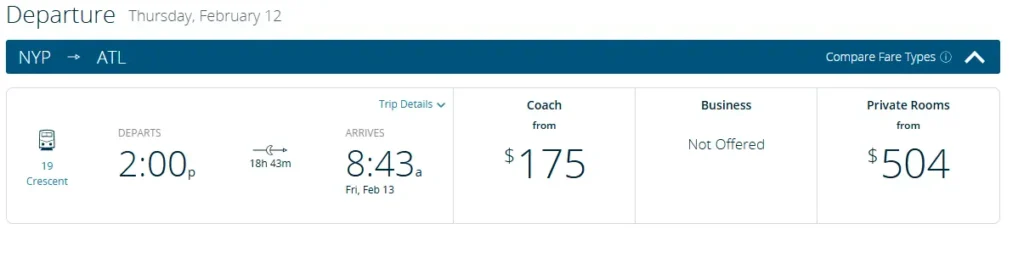
Now, if you compare the same route (New York to Atlanta) in the month of February 2026 will cost you as low as 500 USD for the same Private-Room class.
What are the Recent Amtrak Price Trends?
Post-COVID-19, Amtrak has seen a surge in footfall as more people are choosing trains again, which has pushed the demand upward. As a result, Amtrak has continued to raise its passenger fares in 2025 due to strong travel demand.
In 2025, Amtrak’s revenue reached record levels. For instance, due to Thanksgiving, the travel booking has witnessed a surge in double digits, and is more than 10% compared to the 2024 Thanksgiving season. This surge allows Amtrak to reach more revenue.
But with the higher ticket sales, Amtrak is still far from profitable. The company reported a loss of 600 million USD, which is an improvement over the previous year’s losses of 700 million USD.
In addition, inflation has also played a bigger role with rising fuel costs, labour wages, maintenance expenses, and other costs. These costs have witnessed a surge in Amtrak’s base fare, which means that even low-demand tickets cost more than ever before.
Conclusion
So, what is Antrak so expensive over other travel options? From maintaining century-old aging rail tracks and operating unprofitable longer routes to limited federal subsidies and high labour costs, Amtrak faces expenses that make it far from profitable.
Because these costs cannot be recovered from funding, the Amtral totally relies on the ticketing revenues to sustain its operations.
For passengers, understanding the above-mentioned factors helps passengers set realistic expectations. Also, fares are dynamic; it is best recommended to book early, avoid peak travel periods to make your travel with Amtrak more affordable and reliable.
FAQs
Amtrak tickets cost more because the company has expensive operating costs. A major cost is incurred from maintaining older tracks, which require constant repairs. Also, Amtrak does not own most of its tracks, so the railroad has to pay rent to run its operations.
long-distance Amtrak ticket costs around 250-350 USD for a regular Coach class. If you choose a Private Room class, it will cost you around 500-700 USD. These prices vary with the demand.
Yes. For longer distance travel, Amtrak charges almost the same for Coach class compared to flights on similar routes.
If you book your Amtrak 14 days before travel, you may get a cheaper fare. Also, any group of 20 or more can save up to 20% on rail fares. The rail network also offers special discounts for kids and senior travelers.