
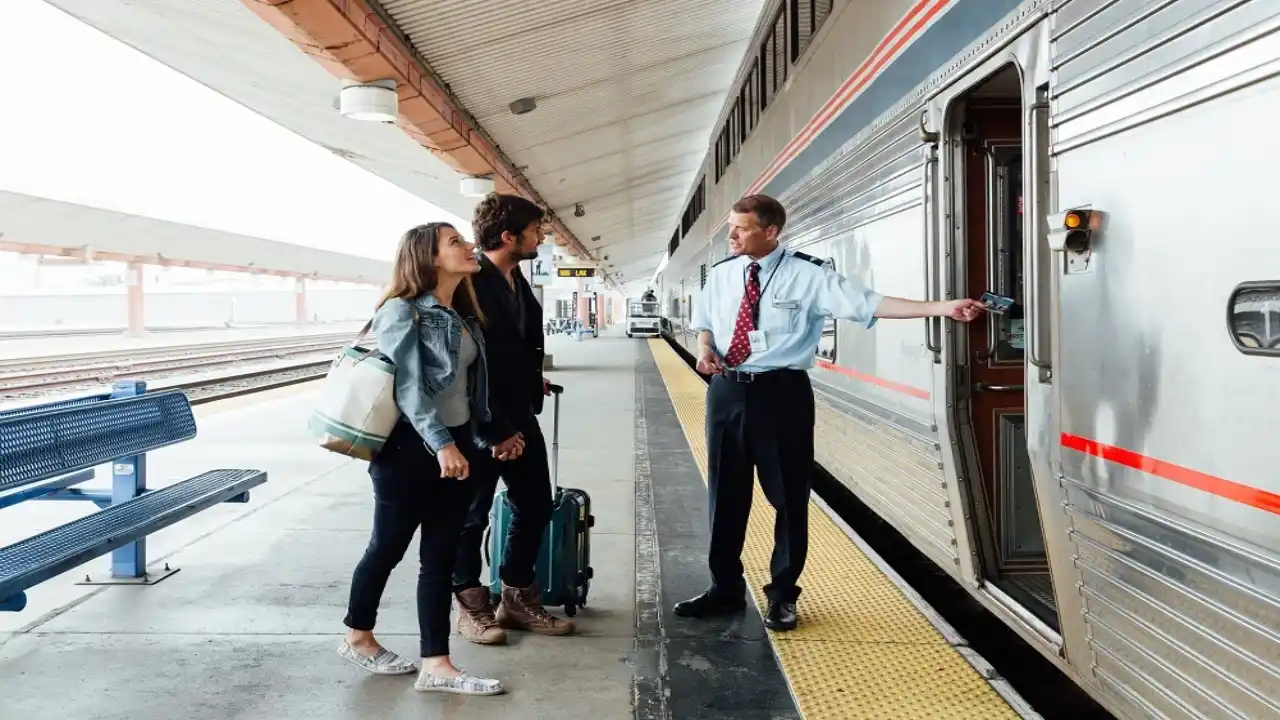
Traveling on Amtrak combines comfort, convenience, and scenic routes, but not all expectations are written down. Experienced passengers and onboard staff follow a set of unwritten Amtrak etiquette rules that make the journey smoother for everyone.
Understanding these customs helps prevent common travel mistakes, especially on long-distance or overnight trips.
Quiet Car Etiquette on Amtrak Trains
Quiet Cars are designed for minimal noise, but the real expectation goes beyond posted rules. Phone calls are discouraged entirely, and headphone audio should not be audible to nearby passengers. Conversations are typically moved to the space between train cars.
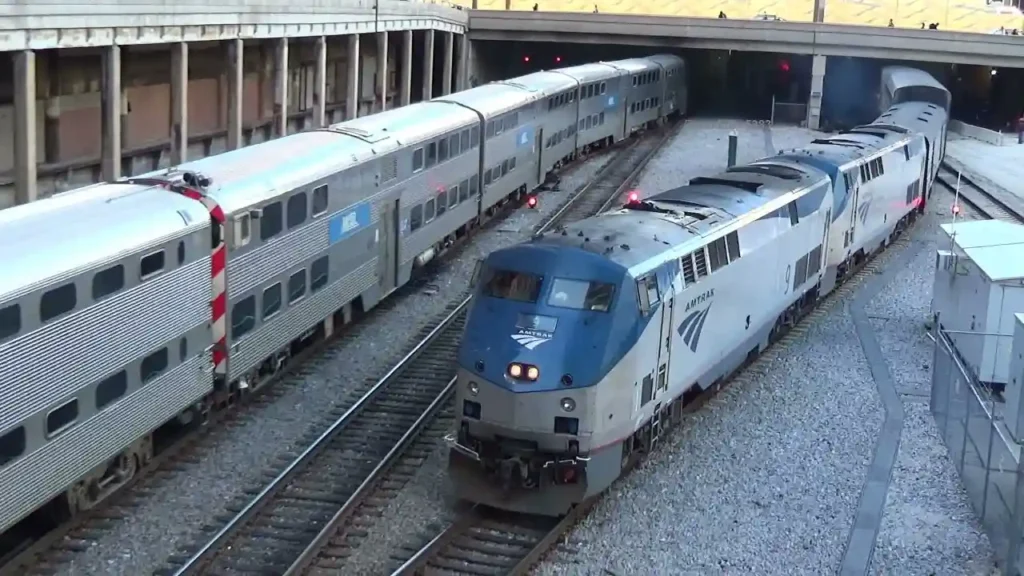
Passengers in Quiet Cars often take advantage of available Wi-Fi on Amtrak trains while keeping their devices at low volume, ensuring a calm and productive environment.
Seating Etiquette
On many routes, seating is unassigned, and conductors manage seating based on passenger volume, destination, and accessibility needs. Leaving open seats during busy periods is considered courteous, while crowding or reserving multiple spots can cause friction.
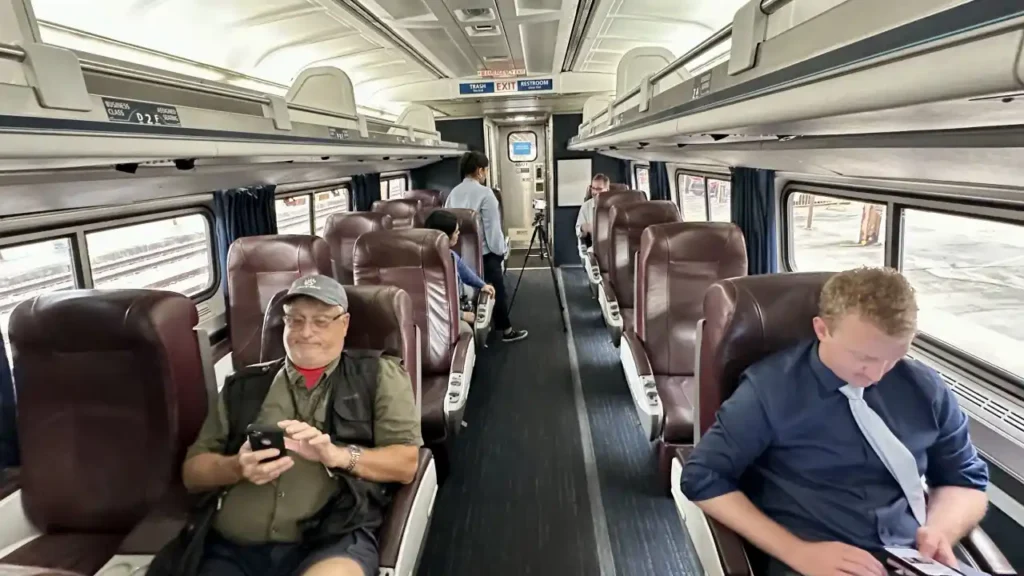
For travelers looking for more comfort and guaranteed seating, Business Class and First Class cabins offer dedicated space and amenities, making adherence to etiquette less stressful.
Boarding Etiquette at Stations
Boarding usually follows an informal hierarchy, even when not announced. Passengers requiring assistance board first, followed by Business Class and sleeper passengers, with Coach passengers boarding last. Respecting this order helps avoid delays and congestion.
Arriving early also ensures enough time for boarding and luggage handling, especially for longer trips. Guidance on arrival timing can be found in how early to arrive at Amtrak stations and station stop durations.
Luggage Placement Etiquette
Proper luggage placement ensures both safety and comfort. Small bags are stored in overhead racks, while larger suitcases belong in designated storage areas. Blocking aisles or exits may lead to staff intervention.
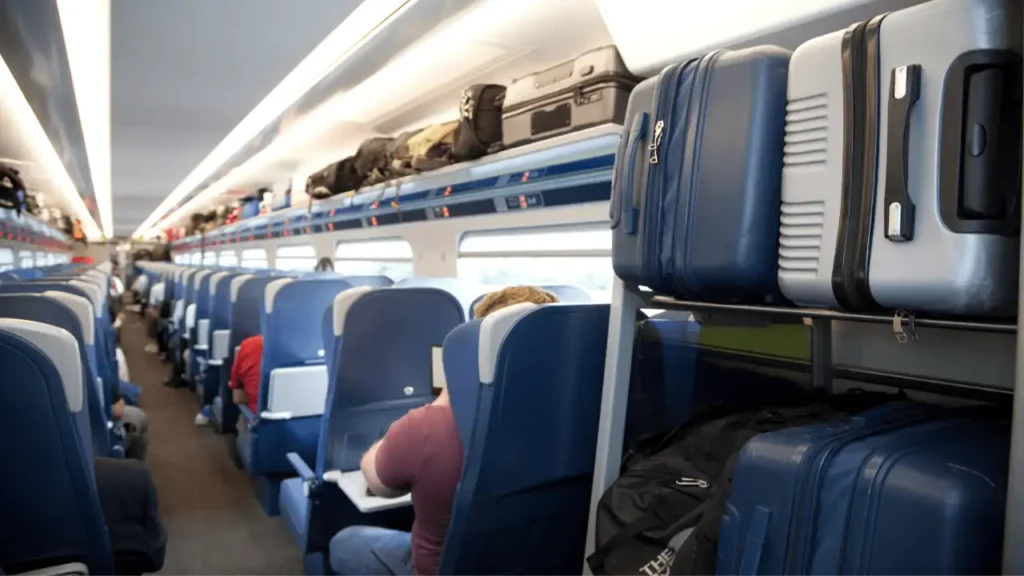
For passengers managing multiple bags, Amtrak luggage limits provide clear guidance on what can be carried onboard.
Shared Space and Armrest Etiquette
Personal space is limited on trains, so respecting shared areas is essential. Window seats provide wall support, aisle seats allow easier movement, and center armrests are considered communal. Awareness of these norms prevents unnecessary discomfort for neighboring passengers.
Food and Beverage Etiquette
Outside food is allowed, but strong-smelling meals such as seafood or heavily spiced dishes can disturb others. Mild snacks and beverages are preferred. Passengers can refer to guidelines on bringing food on Amtrak for clarification.
Standing and Movement Etiquette
Standing near doors before arrival is discouraged. Conductors release passengers car by car to maintain order, and remaining seated until instructed helps ensure safety.
Following Staff Instructions
Requests from conductors, such as moving to another car or changing seats, are often related to safety, train balance, or scheduling. Cooperation ensures smooth operations and minimizes delays.
Power Outlet and Overnight Travel Etiquette
Power outlets are limited, so polite sharing is expected. On overnight routes, lights are dimmed, voices lowered, and seat reclining becomes the norm. Awareness of these expectations contributes to a peaceful journey.
Courtesy and Restroom Etiquette
Polite behavior toward staff and fellow passengers improves the journey for everyone. Shared restrooms should be used briefly and left clean. These small actions reflect a general culture of respect on Amtrak trains.
Seat Reclining Etiquette
Seat reclining is widely accepted but should be done considerately. Reclining after departure and checking behind the seat ensures nearby passengers remain comfortable. For more details on proper reclining, see how to recline Amtrak seats.