
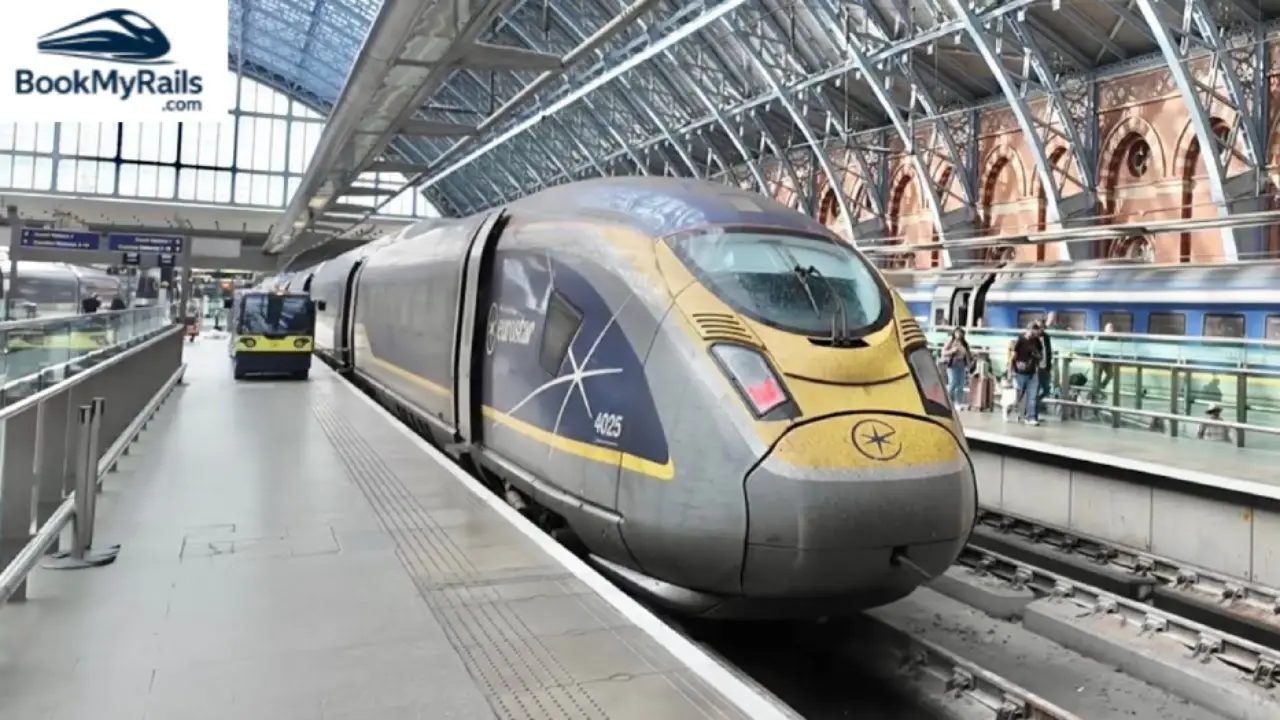
Yes. Eurostar goes underwater for some part of its journey. While traveling to and from London, the traines runs beneath the English Channel through the Channel Tunnel, which connects the United Kingdom with mainland Europe.
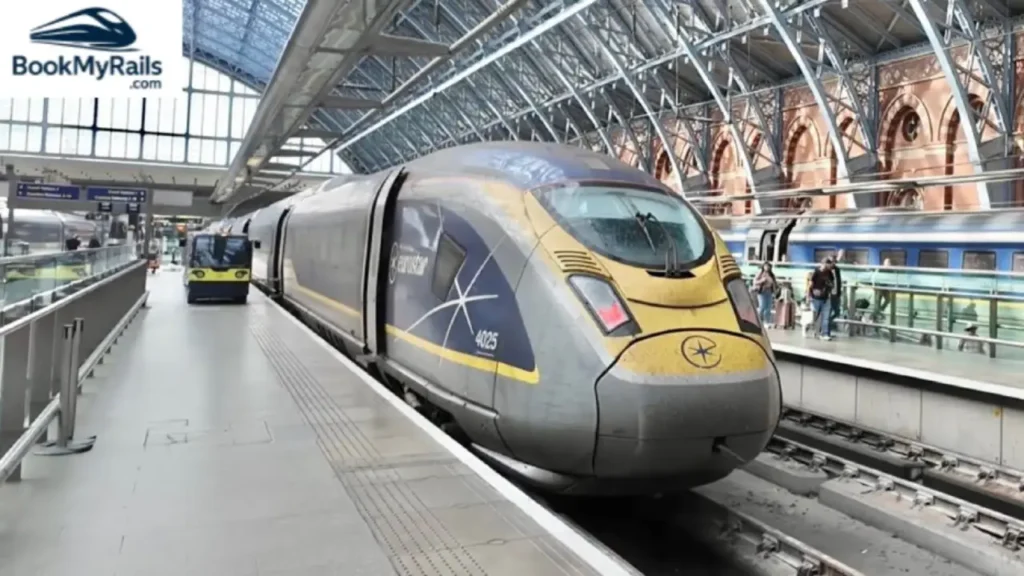
This undersea journey enables Eurostar to operate trains directly between London and cities such as Paris, Brussels, and Amsterdam, eliminating the need for connections via ferries and flights.
Does the Eurostar Go Underwater?
Yes, Eurostar goes underwater and passes through the 75 metres long Channel Tunnel, which runs beneath Enfglish Channel below sea level.
Out of the tunnel’s total length of about 31.5 miles, nearly 23.5 miles lie underwater. This makes the Channel Tunnel the longest undersea tunnel in the world.
The tunnel separates southern England from northern France. Engineers built the underwater section as a reinforced rail tunnel so the train remains completely enclosed and never comes in contact with seawater.
Travelers board the Eurostar train on land. The train enters the tunnel, travels underwater, and emerges on the other side smoothly, making the journey fast and safe.
Eurostar Underwater Journey Explained
The Eurostar underwater journey that passes through the Channel Tunnel enter bear Folkestone in the UK and exits near Coquelles in France.
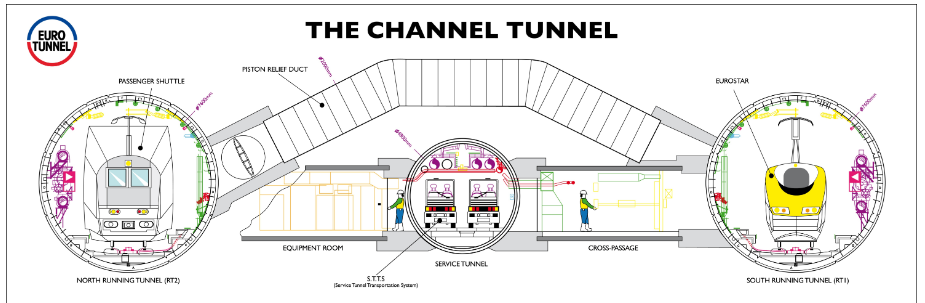
The Eurostar Channel Tunnel comprises three tubes: two for trains and one for service.
Passengers observe that when the train enters the terminal, the lights get dim but the ride stars comfortable. The Euristar maintains a speed of 160 km/h.
Eurostar handles the pressure change inside the tunnel. The ventilation system inside keep air fresh.
When passengers go through the tunnel, they catch a glimpse of the wall of the tunnel,l which is made of reinforced concrete.
The Eurostar train under the sea gives passengers a unique experience without views.
Also, check out the guide on how much luggage you can carry on trains to Europe.
Is Eurostar Underwater the Whole Way?
No. Eurostar does not travel underwater for the entire journey. It goes under the sea while crossing the English Channel. The rest of the route runs on land.
From London, passengers board the train from surface tracks through Kent. It enters the Channel Tunnel near Folkestone. The trains emerge from the tunnel in northern France and continue to run on open high-speed rail lines to Paris.
The Eurostar’s undersea section covers only 50 km, while the total London–Paris route spans approximately 495 km.
Can You See Underwater on the Eurostar?
No. Passengers cannot see underwater while traveling on the Eurostar. The train passes dark tunnels, so there are no underwater views.
As the Eurostar travels through the Channel Tunnel, all passengers see is the reflections in the windows because it traverses through a dark tunnel. In addition, the tunnel runs deep beneath the seabed, which blacks batural light and outside visibility.
The Channel Tunnel transports the train from the ocean. Because the undersea section is smooth and quick, many passengers didn’t even notice when the train entered or exited the tunnel.
Eurostar Route Through the English Channel
The Eurostar crosses the English Channel as the journey begins at London St Pancras International. This is where trains travel southeast on surface tracks through Kent.
For the Eurostar underwater route, the train stops at Ebbsfleet International or Ashford International before you reach the Folkestone, where it enters the tunnel. The tunnel crossing lasts for 35 minutes.
Passengers exit the terminal near Calais in northern France, where the train continues on high-speed lines to Paris Gare du Nord. The London–Paris journey lasts for 2 hours and 15 minutes.
Eurostar also operates on routes to Brussels and Amsterdam.
Check what other routes the Eurostar covers
In conclusion, Eurostar offers the most reliable connection between the UK and Europe. As the train goes underwater through the Channel Tunnel. The Eurostar undersea jouney lastsfor 35 minutes, covering 31.5 miles beneath the English Channel. Passengers experjce safe and smooth ride without ocean views as the train passes through the reinforced tunnel.
The Channel Tunnel was built in 1994 and stands as the world’s longest undersea rail link. It reaches a depth of 75 meters below sea level, carrying millions of passengers with advanced safety features.
Eurostar trains hit speeds up to 300 km/h on land and ooperateat reduced speed inside the tunnel, covering the London to Paris trip in just two hours.
Frequently Asked Questions (FAQs)
Yes. It is safe to travel underwater on Eurostar. The Chennel Tunnel features 36000 advanced safety systems and regular drills. The tunnel also features dedicated service tunnels that allow safe evacuations if needed. In addition, there are modern fire-suppression systems to contain fire incidents quickly.
Eurostar is a high-speed train service that connects the UK with mainland Europe. It links London with major European cities, including Paris, Brussels, Lille, Amsterdam, and Rotterdam.
On open high-speed tracks, Eurostar trains reach speeds of up to 300 km/h. Inside the Channel Tunnel, trains operate at a reduced speed of around 160 km/h.
Eurostar trains offer Wi-Fi, power outlets, and comfortable seating, which allows passengers to work or relax throughout the journey.
The Eurostar undersea route is a mix of high-speed rail, undersea engineering, and international travel in a single journey. More than 13000 workers helped build the Channel Tunnel, making it one of the largest international infrastructure projects ever completed.