
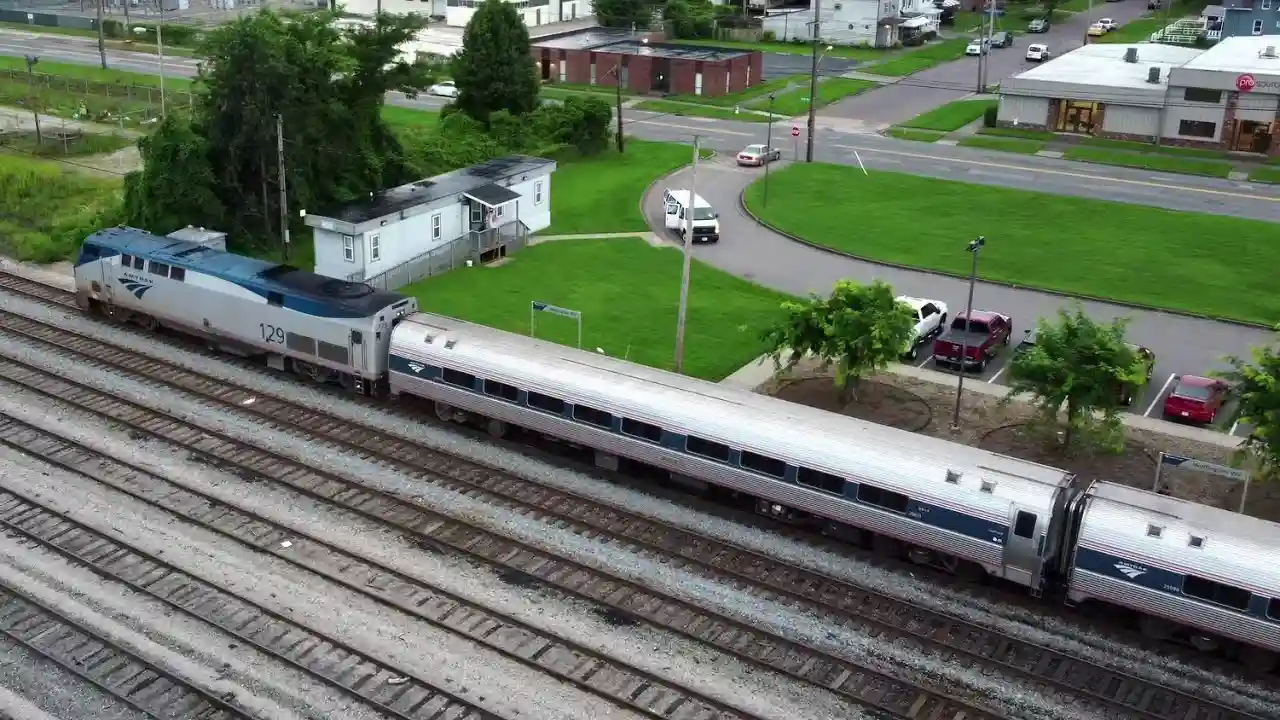
For most trains, the Amtrak stops at stations for a very short time time usually between 3 and 5 minutes. This brief stop allows passengers to get off the train or board comfortably. However, not all Amtrak stations stop for a few minutes.
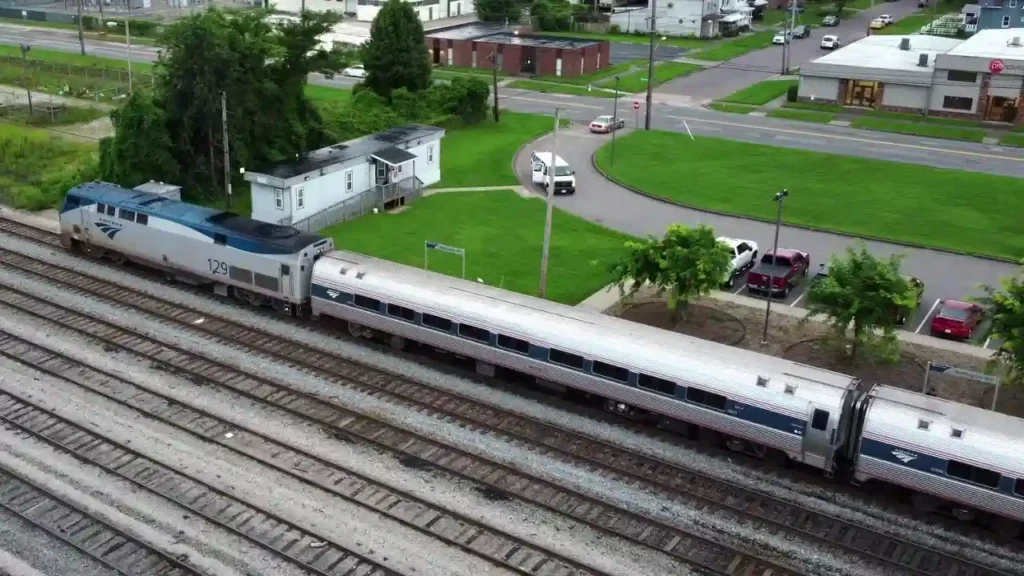
For instance, the standard passenger stop lasts about minutes. In addition, there are some Amtrak trains that make fresh-air or smoke-break stops that last for 10-15 minutes. Amtrak also schedules longer stops of 10 to 30 minutes at larger stations for crew changes, train servicing, or operational needs.
What Does an Amtrak Station Stop Actually Mean?
Amtrak station stop refers to the period when a train halts at the platform that allows that facilitates the movement of passengers and luggage.
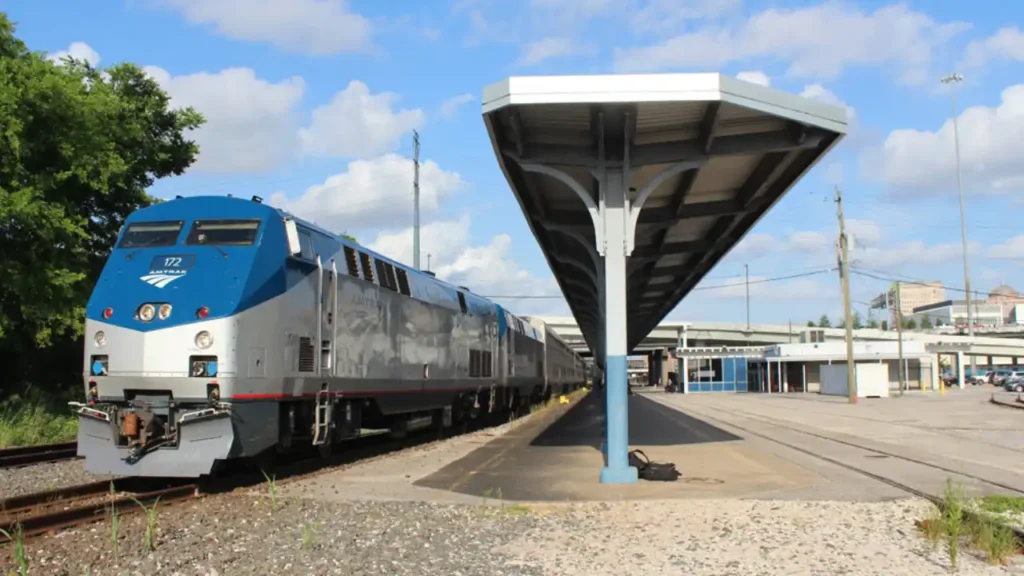
Although the stop may seem like a simple pause, it is strategically a regulated and synchronised event that manages the regional rail traffic and complies with federal safety standards.
Arrival Time vs Departure Time – For Amtrak, aim to arrive 30 minutes before departure for general travel. If carrying baggage, traveling with pets, or passing through a busy station, allow 45-60 minutes before departure. Amtrak boarding starts 20-25 minutes before departure.
- At many Amtrak stations, the display board shows only the departure time because the stop is too brief and may last no more than 3 minutes.
- However, at major terminals, travelers will experience a gap of up to 15 minutes between the listed departure and arrival times.
Also, if an Amtrak train reaches the station ahead of its scheduled arrival, it will remain at the platform until the listed departure time.
What IsAmtrak Dwell Time? – It refers to the duration a train stops at a station. Unlike layovers, which include longer halts for maintenance or operational reasons, dwell time applies to scheduled station stops that last between 40 seconds and 4 minutes.
How Long Do Amtrak Trains Stop at Stations on Average?
On average, Amtrak trains stop at stations for 3 to 5 minutes. The exact time depends on the passenger volume, size of the station, and the type of service. Small stations have halts for lesser time while larger terminal inciolves a longer stops for maintenance and other operational reasons.
Stop time at small stations: At small town stations like Quantico, VA, and Flagstaff, AZ, Amtrak trains stop for 1 to 3 minutes. These brief stops allow quick boarding and exiting and usually involves few passengers. Many rural stations do not offer checked baggage servicee so trains depart almost immediately after passengers board or leave the train.
- For instance, on the California Zephyr, small stations like La Plata, Missouri, offer stops for 2 minutes only, which is enough time for passengers to board or get off.
Stop time at medium-sized stations: Medium-sized stations like Alexandria, VA, Eugene Depot, OR, and Milwaukee Intermodal Station handle moderate to high daily ridership. At these stations, Amtrak boarding time is approximately 5-10 minutes.
- Because these stations handle higher passenger volumes, trains require additional time for boarding, checked baggage handling, and accessibility services.
Stop time at major hubs: Stations like Chicago Union Station is coinsiderd a major hub where Amtrak stop duration of 20 to 45 minutes. The stop here facilitates not only passengers boarding but crew changes, refueling, servicing, as well as scheduled layovers for connecting passengers.
Check out our guide to learn how much luggage you can carry on Amtrak.
What Really Happens During Amtrak Station Stops?
Although Amtrak publishes expected stop times, the actual Amtrak scheduled station stops vary in reality. Here are the insights from conductors, onboard staff, and frequent long-distance travelers that reveal some clear and consistent patterns. For instance:
- Most of the Amtrak station stop times are too short for passengers to step off the trains. At these stations, Amtrak warns travelers that even a brief exit from the car can lead to missing the rest of their journey.
- So-called “fresh air” or “smoke” stops are not always guaranteed. When they occur, they last for 10 to 15 minutes but can be shortened or canceled even at the last moment if the train is running behind schedule. These stops are not listed on the public timetables.
- Stopping at major stations does not mean it lasts for at least 30 minutes. Even if a stop is scheduled for crew change, those need to be completed quickly.
- When the conductor announces “All aboard,” the train is ready to depart immediately. Experienced passengers are aware that the train can leave in seconds, regardless of the scheduled arrival time, once the conductor gives the call.
Understanding Amtrak station stop times helps passengers plan their travel in the right direction. On average, the train halts for 3 to 5 minutes at most stations allowaing travelers to board or exit quickly. There are small local stops that last for 1 to 3 minutes.
However, medium-sized stations extend stops to 5 to 10 minutes to accommodate higher passenger volumes, accessibility needs, and luggage handling. In addition, major hubs feature longer stops ranging from 20 to 45 minutes for crew changes, refuleing and connections.
Amtrak dwell time per station ranges from 40 seconds to 4 minutes. Some stops carry due to delays or scheduled breaks, such as fresh air or smoke breaks that last for 10 to 15 minutes. To avoid no-shows, passengers should arrive 30 to 60 minutes before departure.
FAQs
No. It mainly stops at major stations, and smaller stations have stops from select trains. The exact stops depend on the route and schedule across Amtrak’s more than 30 routes serving over 500 destinations.
You can use the Amtrak app by selecting your train number, date, and upcoming station. It shows estimated stops and real-time train status.
No. Most stops lack food options, but some stations, like Orlando, FL, feature vendors on the platform selling items like hot dogs, wraps, and bottled beverages.