
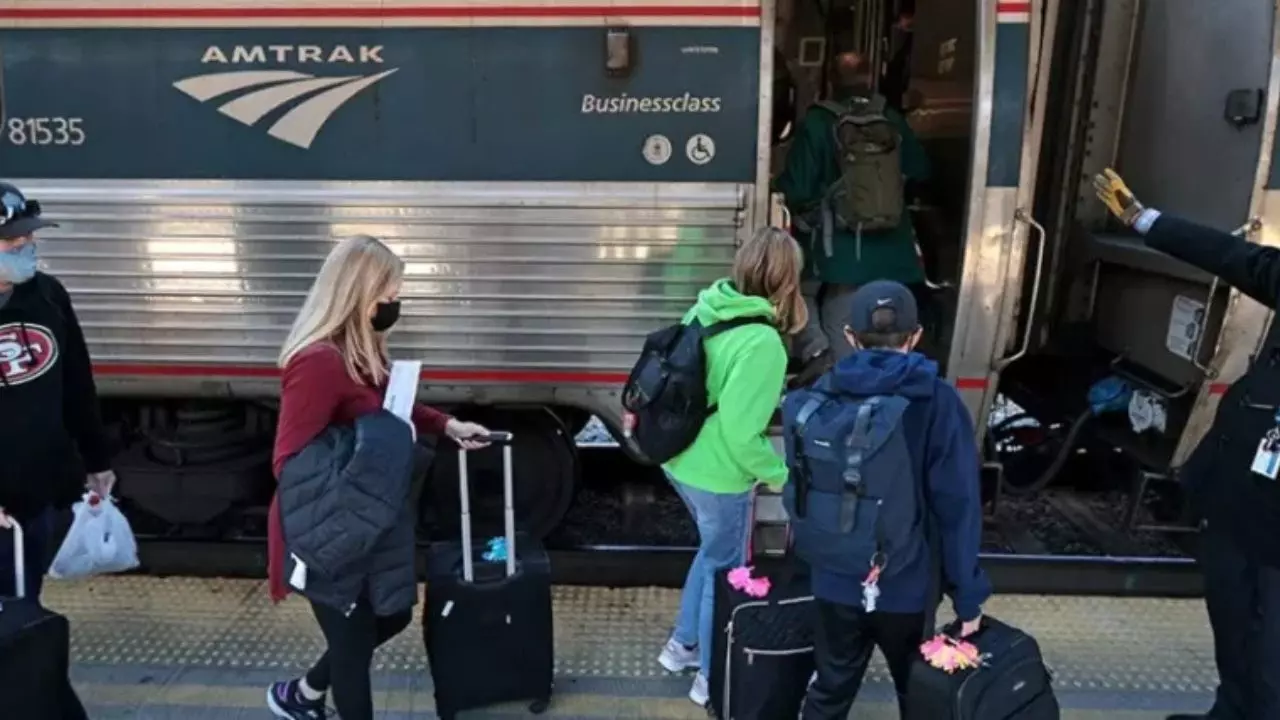
Amtrak is generally a safe way to travel, with millions of passengers using it every year. In fiscal year 2024, Amtrak served close to 34.5 million passengers, a 5% increase over the previous year, with no major passenger-related accidents that disrupted its schedule.
This continues a long-term trend of improving safety, as Amtrak’s accident rate per million passengers has declined significantly over the decades.
Questions about Amtrak safety – how safe Amtrak is overall, and whether it’s safe at night – are completely reasonable. This guide breaks down the data and real-world factors behind those concerns to help you make an informed decision.
What Does Amtrak’s Safety Record Tell Us?
Amtrak is considered to be one of the safest modes of transportation in the U.S. In FY2025, the airlines carried 34.5 million passengers while reporting zero fatalities from train collisions or derailments.
Has Amtrak’s safety performance improved over time?
Yes, according to data provided by the Federal Railroad Administration (FRA) in 2001, Amtrak recorded 4.1 accidents per million passenger miles, compared to 1.7 accidents in 2014. This shows a reduction of nearly 59% shows an improvement in their operations.
How often have the derailments occurred today compared to the past?
Derailments in the early 200s were around 80 per year, and by 2014, it had dropped to 28. This signifies an improvement in infrastructure maintenance and stricter operating guidelines.
In addition, Amtrak has Positive Train Control (PTC), an automated rail safety system that prevents overspeeding, collisions, and derailments. Amtrak has deployed PTC on all Amtrak routes for years, which receives instant updates about slowing or stopping the train to prevent potential collision, adding another strong layer of protection.
Is Amtrak Safer Than Driving or Flying?
Amtrak rail network maintains a fatality rate of approximately 0.43 deaths per billion passenger-miles. The fatality rate for driving is 7.3 deaths per billion passenger-miles. When you compare this to da driving rail journey in the United States is 17 times safer.
But when you compare these numbers with air travel, Amtrak faces steep competition, especially from a ground transportation point of view. Air travel is statistically considered much safer.
Also, when comparing the Amtrak with the European rail system, U.S. rail safety lags. Reasons can be higher passenger volumes, more federal funding dedicated to high-speed rail corridors, and fewer grade crossings. Trespassing and grade crossing generally reflect onboard passenger risk.
In 2025, Amtrak reported no fatalities on board but encountered trespassing and vehicle-train collision incidents.
On the busiest rail routes, such as New York – Washington, D.C., or New York – Boston, Amtrak serves 60-75% passengers than all airlines combined.
How Safe Are Amtrak Trains Onboard?
Amtrak trains are built and operated with many safety features, such as:
- Strong train design: The train’s compartments are made with strong steel frames. They are designed to withstand high-intense impact in case of a mishap, which helps protect passengers inside.
- Positive Train Control (PTC): Amtrak uses a mandatory automated safety system that automatically slows down the speed of the train. This prevents speeding, collisions, and derailments. The system remains active all the time.
- Security measures: Amtrak has its dedicated police force supported by a 24/7 helpline at 1-800-331-0008, where passengers can report issues. This ensures passenger and train safety all the time.
- Emergency safety systems: Every Amtrak train has a fire safety system, clear exit routes, and dedicated staff who are trained for emergencies.
Add to that, all Amtrak stations feature baggage screening and enhanced lighting. Also, Amtrak is adding NextGen Acela trains, which are more efficient and are equipped with improvised safety features.
Is Amtrak Safe at Night?
The safety rules and systems that are deployed to operate Amtrak trains during the day are the same at night. Also, there are no notable inboard incidents reported after dark.
If you are planning an overnight journey on Amtrak, please note that train staff regularly patrol throughout the coaches during nighttime.
In addition, there are security cameras in every component that help monitor activities.
Amtrak’s Quiet cars eliminate noise and disturbances that promote a calm and secure environment.
Is it safe for solo travelers at night? Yes, many passengers who travel alone say they feel comfortable and secure in Amtrak’s sleeper cars, which have locking doors.
How Quickly Does Amtrak Respond to Incidents?
Train incidents do happen, but they are rare and are most likely caused by outside factors such as grade crossings.
In the event of an incident, Amtrak promptly coordinates with local police, fire, and emergency services. Also, passengers are evacuated if needed. The rail network’s main goal here to keep passengers safe and well-informed.
Every incident is reported, ensuring that mistakes are not repeated. These investigations are conducted for better track monitoring that will help spot any mishaps early. The purpose of this investigation is to determine the conditions of the equipment and see whether maintenance is required or not.
Conclusion
Amtrak safety records highlight a steady decline in the trend over the past. In recent years, there have been zero fatalities recorded from onboard incidents. Millions of people take Amtrak every year; its strong safety systems, trained staff, and constant patrolling help keep passengers protected.
Also, travel offers a comfortable journey and has a much lower risk than driving, and has a safety level close to air travel.
FAQs
Yes. With zero passenger fatalities from on-board incidents in FY2025 and a low fatality rate per passenger-mile, Amtrak has an exceptional safety record through PTC and robust safety systems.
Traveling with AMtrack is 17 times safer than driving and has a safety level almost equal to traveling by flight.
Yes. Amtrak conducts regular crew patrols, implements hi-tech security features, and stringent protocols to make the rail operations safer and comfortable overnight. The sleeper car comes with door access offers additional security.
